

Search is no longer a list of ten blue links.
In 2026, users ask questions inside AI interfaces. They receive synthesized answers, summaries, and recommendations pulled from multiple sources. Platforms powered by generative models now interpret intent, extract meaning, and deliver direct responses. The click is no longer guaranteed.
This shift creates a serious problem for digital marketers and startup founders. Most teams still optimize for traditional ranking signals such as keyword density, backlinks, and page-level authority. Those signals still matter, but they are no longer enough. If your brand is not cited, referenced, or embedded inside AI-generated answers, you are invisible to a growing share of search demand. Traditional SEO focuses on ranking pages. AI-driven search focuses on selecting sources. That difference changes everything.
This guide introduces a practical AI visibility optimization strategy for 2026. You will learn how generative engines evaluate content, how answer-based systems decide what to cite, and how to structure your site so AI models consistently recognize your authority.
The goal is not to chase trends. The goal is to build structural, semantic, and authority signals that make your brand indispensable to AI systems.
If you want your content to surface inside conversational search, generative summaries, and answer engines, the framework starts here.
What Is AI Visibility Optimization in 2026?
AI visibility optimization is the practice of structuring content so generative search systems can interpret, trust, and cite it inside AI-generated answers.
Traditional SEO focuses on ranking pages in search engine results. AI visibility optimization focuses on becoming a source that large language models extract from, summarize, and reference in conversational outputs.
That distinction matters. In a traditional search environment, your goal is position. In an AI-driven environment, your goal is inclusion. Generative engines do not simply match keywords. They interpret entities, relationships, context, and authority signals across the web. Instead of asking, “Does this page contain the keyword?” the system asks, “Is this source credible, topically authoritative, and structurally clear enough to inform an answer?”
Three elements define AI visibility in 2026:
First, entity recognition. AI systems map brands, people, products, and concepts as entities inside knowledge graphs. If your content clearly defines and connects entities, you increase your likelihood of being understood and cited.
Second, topical authority. One article rarely establishes credibility. A structured ecosystem of related content signals depth. Generative systems prefer sources that demonstrate consistent expertise across a topic cluster.
Third, structured data and semantic clarity. Clean formatting, schema markup, and concise definitions make extraction easier. AI engines favor content they can parse efficiently.
Ranking in search results is visibility at the page level. Being cited in AI answers is visibility at the model level.
In 2026, model-level visibility is the new competitive edge.
How AI Search Engines Select and Surface Content

AI-driven search systems do not rank pages the way traditional search engines do. They retrieve information, synthesize it, and generate answers in real time.
Most generative systems rely on retrieval-augmented generation. In simple terms, the model first retrieves relevant documents, then uses them to construct a response. Your visibility depends on whether your content is selected during that retrieval phase.
Selection is not random.
AI systems evaluate semantic depth, contextual alignment, and authority signals. Pages that explore a topic from multiple angles, define core concepts clearly, and connect related entities are easier to interpret and reuse.
Shallow content struggles here. A page that repeats keywords without expanding the concept rarely becomes a cited source. AI engines look for material that explains, clarifies, and contextualizes.
E-E-A-T signals also influence selection. Experience, expertise, authoritativeness, and trustworthiness are no longer abstract SEO ideas. Generative systems analyze brand mentions, author credentials, external citations, and consistency across the web. If your brand is referenced across reputable sites, knowledge graphs reinforce your legitimacy.
Structure plays a critical role as well. Clear headings, concise definitions, FAQ-style clarifications, and logical flow improve extractability. When a system can easily isolate a definition or framework, it is more likely to incorporate it into an answer.
In traditional SEO, ranking is the objective. In AI search, being retrievable, understandable, and trustworthy determines whether your brand appears inside the response itself.
Core Pillars of an AI Visibility Optimization Strategy

AI visibility is not achieved through isolated tactics. It requires structural alignment across your entire content ecosystem.
The first pillar is topical authority mapping. Instead of publishing disconnected articles, you build clusters around core themes. Each cluster should define primary entities, supporting subtopics, and related concepts. When AI systems evaluate your domain, they detect depth, consistency, and coverage. This increases the probability that your brand becomes a trusted source for that subject area.
The second pillar is entity-first architecture. Every important concept, product, founder, framework, or methodology on your site should be clearly defined and internally connected. AI systems rely on entity recognition to understand meaning. When your content consistently references and reinforces entities, it strengthens your presence inside knowledge graphs.
The third pillar is structured data implementation. Schema markup, clean HTML hierarchy, and semantic formatting improve machine readability. Structured definitions, labeled sections, and properly nested headings reduce friction during content extraction.
Internal linking forms the fourth pillar. Links should reinforce semantic relationships, not just distribute authority. When a pillar page connects logically to supporting content, it signals subject mastery rather than random publication.
Finally, formatting for extractability matters. Concise definitions, clearly framed frameworks, and structured FAQ sections make it easier for AI systems to isolate usable answers.
Traditional SEO rewards optimization at the page level.
AI visibility rewards coherence at the system level.
Brands that align architecture, authority, and structure will dominate AI-driven discovery in 2026.
Tactical Implementation Plan for Marketers and Startups

Strategy without execution produces no visibility. AI optimization requires deliberate restructuring, not minor adjustments.
Start with an AI readiness audit. Review your top-performing pages and evaluate them through three lenses: entity clarity, semantic depth, and structural extractability. Does each page clearly define key concepts? Are related entities internally linked? Can a model easily isolate a usable definition or framework?
Next, identify AI-driven search behavior. Traditional keyword tools reveal search volume, but conversational queries require deeper analysis. Study question-based searches, long-form prompts, and comparison queries. Map these to content that answers intent directly, not indirectly.
Then optimize high-performing assets for extraction. Strengthen introductions with concise definitions. Add clearly labeled sections. Refine subheadings so they describe outcomes, not vague ideas. Tighten paragraphs to improve clarity. AI systems favor content that reduces ambiguity.
Authority development must follow. Publish expert-led content with visible credentials. Reference credible sources. Encourage brand mentions through partnerships, interviews, and data studies. AI systems analyze external validation when determining trust.
Finally, monitor AI citation visibility. Track when your brand appears inside generative answers, not just traditional rankings. Observe shifts at the query level. If certain topics trigger AI citations while others do not, refine those clusters.
Optimization in 2026 is not about publishing more.
It is about making your existing content structurally indispensable to AI retrieval systems.
Metrics That Matter in 2026
Traditional SEO dashboards are no longer sufficient. Rankings and organic traffic still provide signal, but they do not fully capture AI-driven visibility.
The first metric to monitor is AI citation frequency. How often does your brand appear inside generative answers for high-intent queries? This requires manual testing across AI interfaces and structured tracking of recurring prompts. If your brand is consistently referenced for specific topics, it signals model-level authority.
Next, evaluate brand mentions inside AI-generated summaries. Even when your link is not shown, your brand name may appear as a source. That exposure influences perception and downstream search behavior.
Query-level visibility shifts also deserve attention. Compare traditional ranking positions with AI response inclusion. You may rank third in search results yet be the primary cited source in an AI answer. That discrepancy reveals where structural optimization is outperforming positional ranking.
Engagement metrics tied to AI-driven traffic provide another layer of insight. Monitor bounce rate, time on page, assisted conversions, and returning users from AI referral sources. Traffic from informational AI queries often converts later in the funnel rather than immediately.
Finally, track assisted conversions influenced by early-stage AI discovery. When users first encounter your brand through an AI-generated explanation, they may return via direct or branded search later. Attribution models must account for this delayed effect. In 2026, visibility is no longer measured only by position. It is measured by presence inside the answer itself.
Common Mistakes That Reduce AI Visibility
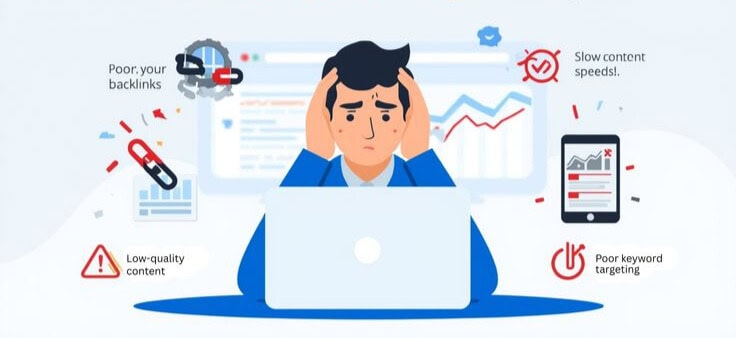
Many brands believe they are prepared for AI-driven search because they already rank in traditional results. That assumption often limits growth.
The first mistake is over-optimizing for keywords without building semantic depth. Repeating target phrases does not increase AI visibility. Generative systems prioritize conceptual clarity and contextual relationships. If your content does not explain how ideas connect, it rarely becomes a cited source.
The second mistake is publishing thin content that lacks demonstrated expertise. Short, surface-level articles may capture minor traffic, but they do not establish authority. AI systems evaluate patterns across your domain. If your site lacks consistent depth, it weakens trust signals.
Ignoring structured data is another common oversight. Without schema markup, logical heading hierarchy, and clearly defined sections, your content becomes harder to extract. Even strong insights lose impact if machines struggle to interpret them.
Authority validation is frequently neglected. Publishing expert content without author credentials, references, or external citations reduces perceived reliability. AI engines assess brand-level credibility across multiple sources, not just individual pages.
Finally, many companies fail to build brand-level signals. Mentions across industry publications, partnerships, interviews, and research collaborations strengthen entity recognition. Without these signals, your brand may remain structurally invisible.
In AI-driven search, visibility declines when clarity, authority, and structure are inconsistent.
Precision, not volume, determines discoverability in 2026.
Conclusion: Building AI Visibility for 2026 and Beyond
Search has evolved from ranking pages to generating answers.
In this environment, visibility depends on structure, semantic clarity, and authority reinforcement. Brands that treat AI systems as secondary traffic sources will struggle. Brands that optimize for extractability, entity recognition, and topical depth will secure long-term advantage.
AI visibility optimization requires three consistent commitments.
First, structural discipline. Your site architecture must reinforce entities and thematic clusters. Clean formatting, schema implementation, and logical internal linking allow AI systems to interpret your expertise accurately.
Second, semantic precision. Content must define, contextualize, and connect ideas clearly. Depth outperforms repetition. Clarity outperforms keyword density.
Third, authority validation. External mentions, expert contributions, and credible citations strengthen trust signals across knowledge graphs. AI systems analyze patterns at the brand level, not just at the page level.
The opportunity in 2026 is not simply ranking higher.
It is becoming part of the generated response when users ask complex questions.
Now is the time to conduct an AI visibility audit. Review your content clusters, entity structure, and citation signals. Identify gaps. Refine your architecture. Strengthen authority indicators.